Does Office Furniture Affect Productivity? Here's What the Research Says
Published on June 29, 2026
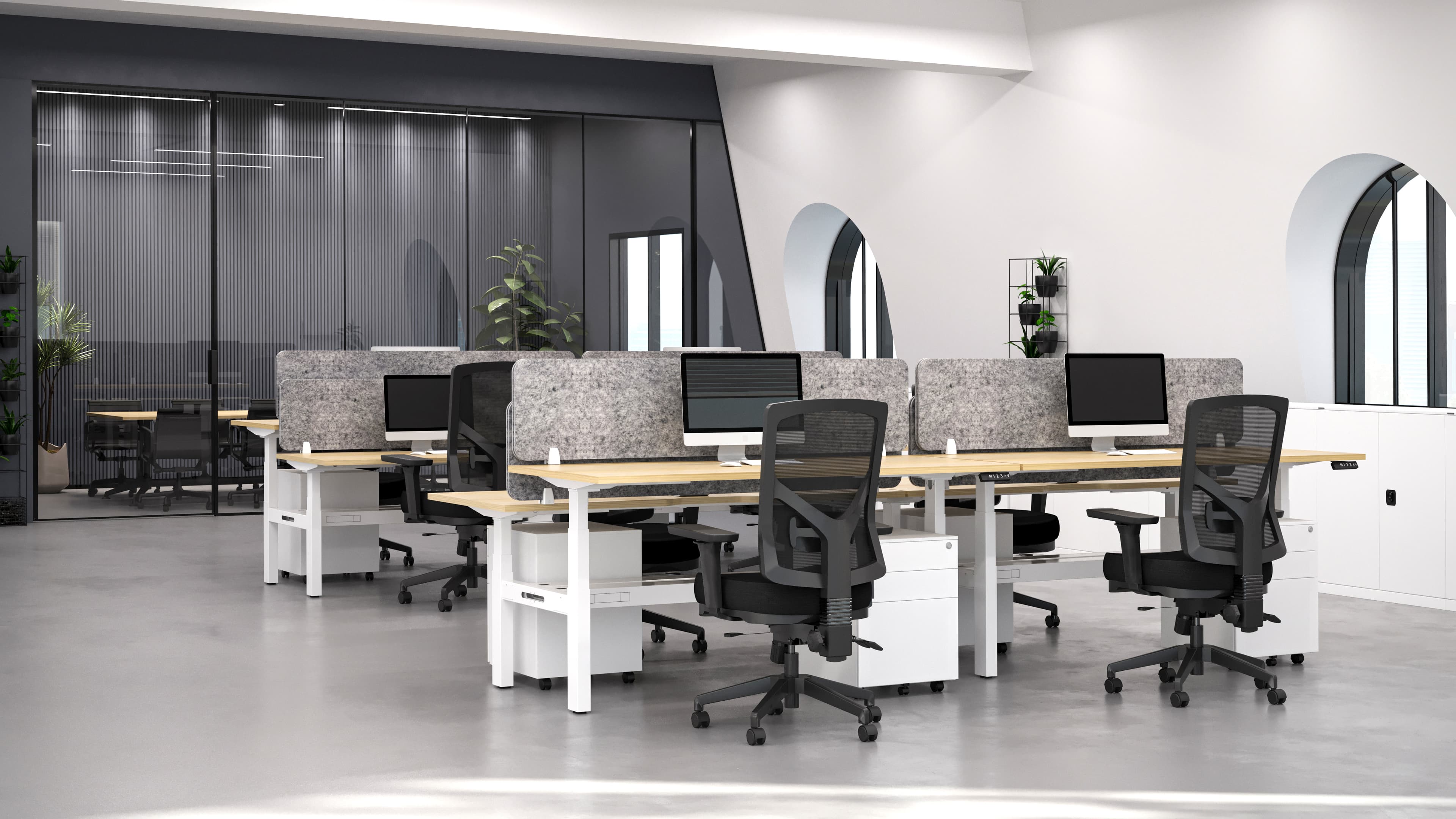
Yes — office furniture can affect productivity, mainly by reducing discomfort, poor posture, and the constant fidgeting that breaks concentration. A better chair or desk will not make someone work harder. It can make it easier to stay comfortable long enough to do the work.
Research on sit-stand setups, including the CDC-published Take-a-Stand Project, has linked less sitting with less upper-body pain and better reported mood while the equipment was in use (Pronk et al., 2012). That is a comfort and wellbeing effect, which is how furniture usually shows up in performance.
Why Comfort Matters for Productivity
When you're uncomfortable, part of your attention is constantly diverted to your body. You might find yourself:
- Shifting in your chair every few minutes
- Rubbing your neck or shoulders
- Stretching your back
- Adjusting your monitor height
- Standing up because your legs feel stiff
These small interruptions may seem insignificant, but they break concentration throughout the day. Comfortable, supportive office furniture allows you to spend less energy dealing with physical discomfort and more energy focusing on your work.
Ergonomic Furniture Supports Better Posture
Ergonomic furniture is designed to fit the human body rather than forcing the body to adapt to the furniture. An ergonomic office chair typically includes:
- Adjustable seat height to keep feet flat on the floor
- Lumbar support to maintain the natural curve of the spine
- Adjustable armrests to reduce shoulder strain
- Seat depth adjustment for proper thigh support
- Reclining backrest to encourage movement
Combined with the correct desk and monitor height, these features encourage a more natural sitting posture that reduces strain on the neck, shoulders, and lower back.
Standing Desks Can Help—But They're Not a Magic Solution
Height-adjustable desks have become increasingly popular, and for good reason. Rather than replacing sitting altogether, standing desks allow workers to alternate between sitting and standing throughout the day.
Sit-stand workstations can reduce discomfort without automatically improving output. The biggest benefit comes from encouraging movement rather than standing all day. Switch positions instead of remaining seated or standing for hours at a time.
Productivity Isn't Just About Chairs
Office furniture works as a complete system. A productive workspace includes furniture that supports the tasks being performed:
- Desks: A desk should provide enough space for your monitor, keyboard, mouse, and documents without feeling cramped.
- Monitor Arms: Proper monitor positioning reduces neck strain while freeing up valuable desk space.
- Storage: Pedestals, filing cabinets, and shelving reduce clutter, making it easier to stay organised and find what you need quickly.
- Meeting Furniture: Comfortable meeting tables and collaborative spaces make discussions easier to sit through.
The Hidden Cost of Poor Office Furniture
Low-quality or poorly fitted furniture can contribute to a range of issues:
- Neck and lower back pain
- Shoulder tension
- Wrist discomfort
- Fatigue
- Reduced concentration
These issues don't just affect comfort—they can reduce efficiency, increase absenteeism, and make long workdays more difficult.
Home Office Productivity Depends on Furniture Too
Many people now spend several days each week working from home. Dining chairs, sofas, and kitchen tables aren't designed for full-time computer work.
Investing in a supportive office chair and an appropriately sized desk can make working from home significantly more comfortable. Even simple improvements—such as raising your monitor to eye level or adjusting your chair correctly—can reduce strain during long work sessions.
Does Expensive Furniture Make You More Productive?
Not necessarily. The most expensive chair isn't automatically the best chair. Instead, look for furniture that:
- Fits your body dimensions
- Offers proper ergonomic adjustment
- Matches the type of work you do
- Is built for long-term comfort and durability
A well-designed ergonomic chair that fits you properly is often more valuable than a premium chair with features you'll never use.
Tips to Create a More Productive Workspace
Whether you're furnishing a corporate office or a home workspace, these changes can improve comfort and focus:
- Choose an ergonomic office chair with adjustable lumbar support.
- Position your monitor at eye level to prevent neck strain.
- Keep your feet flat on the floor or use a footrest.
- Use a desk large enough for your daily tasks.
- Reduce clutter with practical storage solutions.
- Alternate between sitting and standing if you use a height-adjustable desk.
- Take regular movement breaks throughout the day.
Small adjustments often have a greater impact than people expect.
Frequently Asked Questions
Can office furniture really improve productivity?
Yes. Furniture alone will not make someone more productive, but ergonomic furniture can improve comfort, reduce physical strain, and cut the distractions caused by poor posture.
Are ergonomic office chairs worth it?
Yes, for desk work. If you spend several hours a day seated, adjustable support is one of the highest-value changes you can make.
Do standing desks increase productivity?
They generally do not reduce productivity, and they can reduce discomfort by encouraging movement. The useful habit is alternating, not standing all day.
What is the most important piece of office furniture?
For most office workers, the office chair, because it is used continuously. Pair it with the correct desk height and monitor setup.
Final Thoughts
Office furniture won't transform productivity overnight, but it does create the conditions for better work. Comfortable, ergonomic furniture reduces unnecessary physical strain, supports healthier posture, and helps people stay focused on the task in front of them.
Whether you're setting up a home office or furnishing an entire workplace, start with seating and desking that can be adjusted to the people using them.
Sources
Planning an office upgrade?
Get tailored advice on chairs, desks, storage, and full workspace fit-outs from the Iconic team.